
Car Calendar
Receive notifications about upcoming cars


















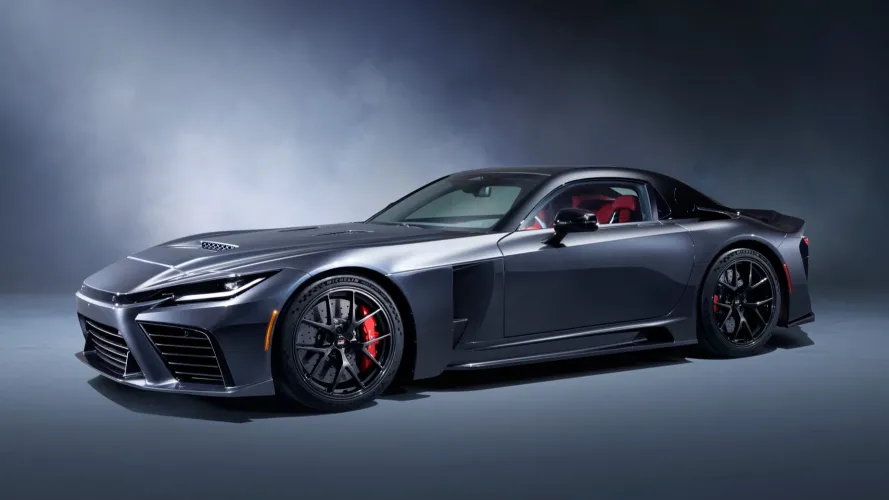



Toyota GR GT
Technical description:
4.0L V8 Twin-Turbo Hybrid
Over 650 hp and 850 Nm
Rear-wheel drive (RWD)
8-speed automatic transmission
Top speed exceeding 320 km/h
Aluminum chassis and carbon-fiber components
Two-seat GT body style with an exceptionally long hood and a low-slung profile
- A signal of emotion returning: GR GT on the threshold of 2027
- History and evolution: from the 2000GT and LFA to the GR GT
- Architecture and materials: frame, CFRP and balance
- Powertrain and hybrid system: twin-turbo V8 + motor in the transaxle
- Aerodynamics and chassis: function shapes form
- GR GT3 for the track: homologation, BoP and racing goals
- Behind the wheel: driver-first philosophy and the people behind the project
- Market, price and availability: how to buy the GR GT
- Positioning and rivals: where the GR GT is aiming
- Debates and doubts: power, hybrid system, styling and brand
- When adrenaline meets craftsmanship
A signal of emotion returning: GR GT on the threshold of 2027
The world premiere on December 5, 2025 made one thing clear: Toyota Gazoo Racing is entering the halo GT segment with a concrete plan. Production is set to begin in Japan in 2027, and the GR GT is meant to be what the LFA was for the previous decade — a manifesto of the “driver-first” philosophy and craftsmanship passed down through generations (Shikinen Sengu). Only this time, without a limited run of 500 units and with a much broader ambition.
Why the GR GT matters right now
This is not a sentimental return to the 2000GT, nor an attempt to recreate the LFA. The GR GT combines track competence with everyday usability, something along the lines of: take a GT3 to the Nürburgring in the morning, then drive it home in the evening. FR layout (front engine, rear-wheel drive), a twin-turbo V8 with hybrid support (development targets are ≥650 PS and ≥850 Nm), aerodynamics designed around track requirements, not styling. A two-seat coupé that is supposed to exceed 320 km/h, but does not shout about it from a distance.
In the United States, it will be sold through selected Lexus dealerships, with sales details to be revealed later. The rest of the world? A little more patience is still required. This article explores the evolution from the 2000GT through the LFA, breaks down the technology, explains the GT3 connection, and looks at the drivers, rivals and controversies surrounding the sales process. Because the GR GT is not just a car — it is a test of whether an emotional GT can still be built without compromise in the age of electrification.
History and evolution: from the 2000GT and LFA to the GR GT
Roots: the 2000GT and LFA as halo icons
Toyota has always known that a brand needs more than practical sedans. In the 1960s, that role was filled by the 2000GT, a car that showed the world Japan could build something both beautiful and fast. Then, decades later, came the Lexus LFA (2010–2012). That half-million-dollar V10 was never meant to make money. It was meant to create emotion and prove that Toyota’s engineers could build machines on Ferrari’s level. The GR GT steps into the same role, only now under the GAZOO Racing banner.
Morizo and the birth of GR at the Nürburgring
Without Akio Toyoda, this project probably would not exist. He became president in 2009 and immediately began fighting Toyota’s “boring” image. Under the pseudonym Morizo, he competed in the Nürburgring 24 Hours from around 2007, testing cars under extreme conditions. Those racing experiences helped shape GAZOO Racing, which eventually became the GR sub-brand. The philosophy? “Ever-better cars” through testing in fire. Not in a laboratory, but on the track.
From concept to premiere: the GR GT timeline
The milestones form a logical sequence:
- 01.2022 — GR GT3 Concept at Tokyo Auto Salon; the first signals
- 2023–2024 — intensive testing at Fuji Speedway and European circuits
- 07.2025 — prototypes at the Goodwood Festival of Speed
- 05.12.2025 — world premiere alongside the GR GT3 and Lexus LFA Concept
- 09–11.01.2026 — Tokyo Auto Salon, public dynamic demonstrations
- 2027 — production begins in Japan
In the background, Shikinen Sengu keeps appearing — the Shinto philosophy of renewal and the transfer of craftsmanship. Toyota treats the GR GT as a way to preserve know-how before older masters leave the stage.
Architecture and materials: frame, CFRP and balance
Toyota chose a construction method that had not previously appeared in its sports models. The skeleton is an aluminium space frame — the first of its kind in the brand’s history — reinforced in key areas with carbon-fibre components. The bonnet, roof and some body panels are made from CFRP, while the rest is aluminium. The goal? Track-ready rigidity with a mass not exceeding 1,750 kg.
Aluminium skeleton and CFRP composites
The space-frame structure forms a rigid cage to which lightweight panels are attached. CFRP appears where every gram matters, especially high above the car’s longitudinal axis — the roof lowers the centre of gravity. The side panels and rear section are a mix of aluminium and composites, helping keep weight around 1,750 kg, with a wheelbase of roughly 2,725 mm and an overall length of about 4,820 mm.
FR packaging and 45:55 balance
The engine has been moved behind the front axle, mounted as low and as close to the cockpit as possible. At the rear sits a transaxle with a two-speed hybrid transmission, connected to the engine by a CFRP torque tube. The result? A 45:55 weight distribution in favour of the rear, which in practice means better traction on corner exit and improved stability under braking.
The dimensions follow classic GT proportions: a width close to 2,000 mm and a height of just 1,195 mm. The low silhouette and long wheelbase provide stability at high speeds, while the low centre of gravity helps the car change direction. The entire architecture was created with the track in mind, but without sacrificing everyday road usability.
Powertrain and hybrid system: twin-turbo V8 + motor in the transaxle
Toyota has chosen a combustion engine as the heart of the powertrain, but with hybrid support integrated in a way that makes sense for a supercar. This is not an economy-focused solution — it is a technical one.
V8 construction: compact design and hot-vee cooling
The base engine has the following parameters:
- Displacement: 3,998 cm³ (4.0 l), 90° V8
- Valvetrain: DOHC, 4 valves per cylinder
- Forced induction: twin-turbo in a hot-vee layout (turbos mounted within the vee of the cylinder banks)
- Injection: port + direct injection
- Lubrication: dry sump
The hot-vee layout is a deliberate choice: it makes the engine more compact and shortens the exhaust path to the turbochargers. The dry sump means oil pumps allow the engine to be mounted lower, reducing the centre of gravity. All of this supports the philosophy of a low, compact body.
Hybrid system in the transaxle and mechanical LSD
A single electric motor (MGU) is housed in the rear transaxle and works together with a mechanical limited-slip differential (LSD). This is not a typical hybrid system designed merely to assist the combustion engine at low revs, but an additional source of torque working alongside the V8. Integrating it into the transaxle saves weight and avoids extra gearsets.
Transmission, drive and performance targets
Torque reaches the rear wheels through a new 8-speed automatic transmission with a wet start clutch (WSC), without a torque converter. The system is connected by a carbon-fibre torque tube.
Powertrain development targets:
- Power: ≥650 PS (≈478 kW)
- Torque: ≥850 Nm
- Top speed: >320 km/h
These figures may still change before final production, but they show the scale of the project’s ambition. Toyota is aiming for numbers worthy of a flagship performance model.
Aerodynamics and chassis: function shapes form
In the case of the GR GT3, Toyota reversed the traditional design sequence. Instead of drawing the body first and then adapting the aerodynamics, the team began with a computational model created by engineers from the WEC programme. Only then was the body shaped around it. The goal was simple: maximum aerodynamic efficiency, effective cooling and controlled downforce without unnecessary drag.
Double wishbones and new geometry
The suspension uses a classic double-wishbone layout at the front and rear, but the details matter. Toyota used forged aluminium arms and redesigned the entire geometry from scratch to achieve a more linear response to steering and suspension movement. Low-mounted pickup points lower the centre of gravity, which translates into predictability at the limit of grip. Springs and dampers were tuned for track work, while still retaining usability on ordinary roads.
Brakes and tyres worthy of the track
Carbon-ceramic discs are almost certain, although the supplier has not been officially confirmed (reports point to Brembo). This is standard in this class, but Toyota emphasises durability during long track sessions, not just single hot laps. The tyres will probably come from Michelin, specifically a Pilot Sport Cup variant — a compound providing grip on a dry track and acceptable traction in the rain.
All of this serves one goal: a car that responds predictably, holds its line and lets the driver work at the limit without surprises. A low centre of gravity combined with precise suspension provides stability, while the brakes and tyres complete the package.
GR GT3 for the track: homologation, BoP and racing goals
From the beginning, Toyota planned two versions of the GR GT: a road-going halo car and a GT3 race machine. The latter is intended to replace the ageing Lexus RC F GT3 and enter the circuits around 2027 with FIA GT3 homologation.
What separates — and connects — the GT3 version and the road car
The GR GT3 shares its basic architecture with its road-going sibling: a carbon-fibre monocoque, central engine placement and a low centre of gravity. The differences? Everything is subordinated to regulations and BoP (Balance of Performance). Where the road-going GR GT may have 1,000+ hp from a hybrid V6, the GT3 version will be limited by regulations to around 550–600 hp (exact figures depend on BoP). The gearbox will probably be a 6-speed sequential unit, with weight around 1,300–1,400 kg — lighter than the road car thanks to the removal of the hybrid battery and simplifications.
ParameterRoad-going GR GTGR GT3 (estimate)Power1,000+ hp550–600 hp (BoP)Weight~1,500 kg1,300–1,400 kgDriveHybrid V6Combustion engine onlyTransmissionDCT or automatic6-speed sequential
Where and when we will see the GR GT3
The main target is the LMGT3 class in the WEC (World Endurance Championship), meaning Le Mans and the rest of the endurance racing calendar. Toyota is also considering IMSA, although no official decision has been made there yet. The programme is intended to be ready for the 2027 season, possibly a year later depending on the pace of FIA homologation. Importantly, Gazoo Racing is developing the entire project with “drivability” in mind — not only raw speed, but also ease of handling for different drivers. Engineers hope that low weight and body agility will provide an advantage in fast corners, where BoP does not impose aerodynamic restrictions.
Behind the wheel: driver-first philosophy and the people behind the project
The GR GT project is not just about numbers and aerodynamics. It is built around the “driver-first” philosophy Toyota has pursued for years, drawing from the concept of Shikinen Sengu — the Japanese tradition of transferring craftsmanship through practice, not just theory. Engineers work side by side with drivers, and feedback from the track goes directly back to the workshop. No intermediaries, no translation into PowerPoint language.
Morizo and the driver-first ethos
Behind the whole effort stands Akio Toyoda, known as “Morizo” — Toyota’s Master Driver and the man who personally tests every model in the GR family. This is not a ceremonial title. Toyoda literally gets behind the wheel and assesses balance, response and the feeling in his hands. His opinion carries more weight than stacks of technical reports. The GR GT is being developed in exactly that logic: the car must be intuitive, predictable and joyful — not merely impressive on paper.
Who tunes the GR GT: drivers and their roles
The test team is a mix of professionals and enthusiasts from the Toyota family:
- Tatsuya Kataoka — a professional with racing experience, responsible for tuning the limit of grip.
- Hiroaki Ishiura — a chassis dynamics specialist who tests long track loops.
- Naoya Gamou — an engineer-driver who combines technical knowledge with cockpit feedback.
- Daisuke Toyoda — a gentleman driver who brings the perspective of an amateur track-day user.
Each of them drives prototypes, records impressions and discusses changes. The iterative process continues until production begins in 2027.
Dynamic demonstrations: what can be seen from the stands
Tokyo Auto Salon 2026 (09–11.01.2026) offered a taste of what the GR GT can do. Live demonstrations included precise runs, controlled drifts and “donuts” on a wet surface. The audience saw not only power, but responsiveness — the car reacted instantly, without delay. It was proof that the “ever-better cars” philosophy works: continuous improvements, testing and a feedback loop all the way to perfection.
Market, price and availability: how to buy the GR GT
Where: selected Lexus dealerships
Toyota does not plan to sell the GR GT through standard dealerships. In the United States, one of the first markets outside Japan, the model will go to selected Lexus dealerships, where special advisors — sometimes referred to as “GR Meisters” — will operate. It is meant to be a premium experience from the very beginning. The aim is for the car to be bought by people who will actually drive it, not speculators waiting for a quick profit.
For whom: screening and anti-flipping rules
The process will not be simple. Dealerships will likely interview potential buyers, checking their purchase history and enthusiasm for the GR brand. Some sources mention anti-flipping clauses intended to stop people from immediately reselling the car at an inflated price. Toyota has learned from previous limited-model launches and this time wants to be more restrictive. Interest lists are already being opened at some dealerships, although the formal sales launch is still a matter for next year.
How much: price ranges from sources
There is no official price list yet, but automotive media have floated various numbers. The most common figures range from 200,000 to 500,000 USD, although realistic estimates tend to focus on 200,000 to 250,000 USD, with around 300,000 USD also mentioned at times. This will not be a limited series like the LFA (around 500 units), but supply will be controlled at a level that preserves exclusivity. Production is scheduled to begin in Japan in 2027.
Positioning and rivals: where the GR GT is aiming
The GR GT enters the most brutal segment of sports grand tourers, where every new model has to face established icons. Rivals? Porsche 911 (Turbo S, GT3), Mercedes-AMG GT, Ferrari 296 GTB and Chevrolet Corvette Z06. These are cars with established benchmarks in dynamics, prestige and track experience. Toyota is building something that is meant to work differently, not merely faster.
Where the GR GT may win
Expected strengths include a focus on aero-first engineering: active elements, a low centre of gravity thanks to batteries mounted in the floor, and 45:55 weight distribution with the rear axle slightly loaded. The hybrid V6 delivers instant torque, which means more in track corners than raw power alone. Toyota is focusing on handling, repeatability and predictability, not just 0–100 km/h figures. It is somewhat like the LFA philosophy: emotion through precision, not brutality.
Potential compromises
A target weight of around 1,650–1,750 kg sounds reasonable, but in practice it is more than a 911 GT3 (around 1,430 kg) or Corvette Z06 (1,560 kg). Physics is unforgiving, especially in fast direction changes. The dimensions may also be larger, which can be noticeable on narrow European circuits. The question is whether aerodynamics and electric assistance in the dynamics will offset these differences, or whether the GR GT will be more like an AMG GT: fast, spectacular, but somewhat heavier than the sharpest rivals.
These dilemmas are already fuelling debate among fans before the launch.
Debates and doubts: power, hybrid system, styling and brand
The announced parameters stir plenty of emotion. The project targets ≥650 PS and ≥850 Nm, which sounds reasonable to some observers and, to others… well, simply too little for a halo car from a major manufacturer. In a world where competitors reach for 700 or 800 horsepower, expectations rise faster than engineers’ possibilities.
Hybrid system versus purism
The use of a hybrid system is another flashpoint. Supporters point to instant torque, better throttle response and lower consumption in everyday driving. Purists, meanwhile, want a combustion engine without electric assistance, because “it drives better” and sounds more authentic. Toyota has chosen a technological compromise that will satisfy the former, but probably disappoint the latter. That is how these things go.
Proportions and brand identity
The GR GT’s long front end brings to mind the Corvette C7 or AMG GT, which some see as a functional approach to a front-mid-engine layout, while others see it as derivative styling. Discussions also revolve around GR’s status itself — is it already the group’s “fifth brand” alongside Toyota, Lexus, Daihatsu and Hino, or still just a sports division?
The buying process also divides opinions. Sales through Lexus dealerships and screening of potential buyers to prevent speculation are praised by some enthusiasts as care for brand culture. Critics call it gatekeeping that makes access harder even for committed customers. The truth probably lies somewhere in the middle, but the atmosphere can be tense. Which is not exactly surprising with controlled production.
When adrenaline meets craftsmanship
The Toyota GR GT brings together the best of Japanese motoring: engineering precision straight from racing circuits and an obsession with detail visible in every turn of a bolt. This is not an ordinary sports car designed in an office, but the result of transferring Gazoo Racing experience directly onto the road. Rear-wheel drive, a structure focused on mass balance, and a V6 architecture derived from motorsport. All of it adds up to something more than a technical specification.
At a time when electrification dominates conversations about the future of motoring, the GR GT reminds us that emotion still matters. Toyota proves that it is possible to build genuine sports cars without giving up the brand’s DNA: reliability and a carefully considered approach to every element. That combination is what makes this model stand out in the halo-car segment.
The year 2027 will show whether this vision of a Japanese supercar finds its audience. One thing is certain: Toyota has put everything on one card, combining racing heritage with market ambition.